
Currently Empty: ₨0.00

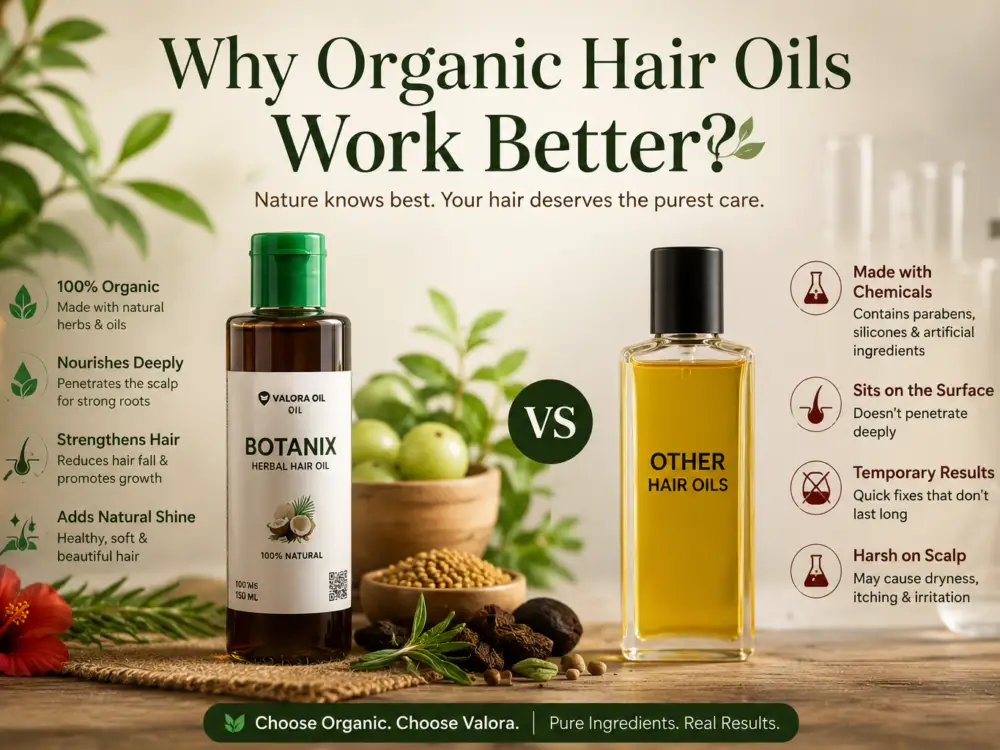
Your shampoo promises silky, shiny hair. Your serum swears it’ll end the frizz. Your conditioner claims to “repair” damage overnight. But here’s what the label will never tell you: most of these products aren’t healing your hair. They’re staging an elaborate cover-up and your scalp is paying the price.
For urban Pakistanis navigating hard water in Karachi, monsoon humidity in Karachi, and constant smog exposure across every major city, this chemical illusion hits different. We’re fighting environmental battles that most hair care brands, designed for European or American climates, were never built to address.
"The solution your dadi swore by, a slow, nourishing champi with pure botanical oil, is now backed by modern trichology. Real healing, not synthetic shimmer."
The Chemical Trap
Walk into any pharmacy in DHA or Gulberg and you’ll find shelves lined with products boasting “keratin,” “biotin,” and “5-in-1 repair technology.” What these products largely contain are silicones, compounds like dimethicone and cyclomethicone, that coat the hair shaft in a plastic-like film.
The result? Instant shine. Smoothness you can see in the mirror. A sense that your hair is healed. But the science tells a different story.
Silicone molecules are large and hydrophobic. They cannot penetrate the hair cortex. Instead, they sit on the surface, sealing off moisture and blocking your scalp’s natural sebum, the very oil your hair desperately needs. Wash after wash, the buildup thickens. The scalp suffocates. And then come the consequences: increased hair fall, chronic dryness masked by product, and the dreaded “chip-chipa” (sticky, lank) feeling even an hour after washing.
Hard Water Damage
Pakistani municipal water has high TDS (Total Dissolved Solids). Chlorine and heavy minerals strip the hair’s natural lipid barrier, leaving it brittle and porous.
Urban Smog & Pollution
Karachi and Lahore’s particulate pollution deposits oxidative stress on the scalp, accelerating breakage and premature graying.
Barsaat Frizz
Monsoon humidity causes hair cuticles to swell and lift, leading to the classic jhaaro (broom) effect that no silicone serum can genuinely fix.
What Organic Oils Actually Do Inside Your Hair
Here’s where organic hair oils, real, cold-pressed botanical oils, enter an entirely different biological conversation with your hair. Unlike silicone-based products, plant-derived lipids share a molecular affinity with the hair’s own lipid bilayer, the protective fatty-acid coating that surrounds every strand.
Research Insight
A landmark study published in the Journal of Cosmetic Science found that coconut oil, due to its low molecular weight and linear chain structure, is the only common oil proven to penetrate the hair shaft and reduce protein loss, both from before and after washing. In contrast, mineral oil and sunflower oil, acting as surface coatings only, showed no measurable protein protection.
Similarly, rosemary oil has demonstrated in peer-reviewed trials a statistically comparable efficacy to minoxidil (a common hair-loss treatment) in stimulating hair growth, without the scalp irritation. Argan oil, rich in Vitamin E and phenolic compounds, actively repairs oxidative damage at the cortical level, restoring elasticity to brittle strands.
This is the cellular difference: chemical products decorate the surface. Organic oils enter, repair, and restore.
Organic vs Chemical Side by Side
Factor
Chemical-Based Products
Valora Organic Hair Oil
Molecule Size
Large (cannot penetrate shaft)
Small plant-lipids (cortex-penetrating)
Scalp Health
Clogs follicles over time
Nourishes & balances sebum
Hard Water Response
Strips residual minerals, leaves buildup
Creates a protective lipid barrier
Hair Fall
Temporary masking, worsens roots
Reduces protein loss from root up
Extraction Method
Often heat-processed (kills actives)
Cold-pressed (full nutrient retention)
Residue
Silicone buildup after 2–3 weeks
Non-greasy, absorbs fully
Long-term Result
Dependency, progressive thinning
Cumulative hair strength & growth
The Valora Different Tradition Meets Modern Science
Most Pakistani hair care brands make you choose: the culturally familiar but heavy, greasy traditional oil, or the light, modern product that’s just a chemical cocktail in pretty packaging.
Valora was built to end that compromise.
Cold-Pressed. Non-Greasy. Made for Pakistani Hair.
Every Valora oil starts with certified organic botanicals, extracted via cold-press technology that preserves 100% of the active fatty acids, antioxidants, and phytonutrients, the compounds that actually do the healing.
- Lightweight formula, no chip-chipa effect
- Penetrates the cortex, not just the surface
- Designed for hard-water-affected hair
- Sulfate-free, silicone-free, mineral oil-free
- Monsoon-tested frizz control that actually holds
- Rooted in the champi ritual, refined for 2024
Ingredients That Work
1) Cold-Pressed Coconut Oil
The only scientifically proven oil to penetrate the hair shaft. Reduces protein loss by up to 39% per washing cycle.
2) Rosemary Extract
Stimulates scalp circulation and follicle activity. Clinical trials show comparable results to standard hair-loss treatments, minus the side effects.
3) Argan Oil (Liquid Gold)
Rich in oleic acid, linoleic acid, and Vitamin E, repairs oxidative damage from smog and UV, restoring elasticity and sheen.
4) Black Seed (Kalonji) Oil
A cornerstone of South Asian wellness. Thymoquinone in kalonji actively inhibits DHT, the hormone directly linked to androgenic hair loss.
Your nani wasn’t wrong when she massaged warm kalonji oil into your scalp every Sunday. She just didn’t have the lab reports to prove it, Valora does.
Reclaim the Champi, The Right Way
The champi is not just a hair treatment. It’s a ceremony of self-care rooted in centuries of South Asian tradition. The act of massaging warm oil into the scalp isn’t just pleasant, it mechanically stimulates the dermal papilla cells responsible for hair growth and increases blood circulation to the follicle by up to 200%.
With Valora’s non-greasy, fast-absorbing formula, you don’t have to choose between a proper champi and your Thursday evening plans. Apply 30–45 minutes before washing. Let the lipids work. Rinse with a sulfate-free shampoo. The ritual fits into your life, not the other way around.
A note on Pakistani water: Karachi’s municipal water has a recorded TDS exceeding 1,000 ppm in several areas, far above the 300–500 ppm considered safe for hair. High TDS means your hair is consistently exposed to mineral salt deposits that rough up the cuticle and accelerate breakage. A regular Valora oil application creates a protective lipid seal that mineral deposits cannot easily strip away.
Ditch the Synthetic Illusion
Feed your roots the raw nourishment they’ve been craving. Real oils. Real science. Real Pakistani hair, finally thriving. 🌿 Shop Valora’s Organic Hair Oil Range, Free Delivery Over Rs. 2,999.
Will organic hair oil make my hair greasy and heavy, like traditional Pakistani oils?
This is the most common concern, and it's completely valid. Traditional oils like mustard or heavy coconut oil can leave that dreaded chip-chipa feeling, sticky, weighed-down hair that looks unwashed by noon. Valora's formula is cold-pressed and specifically blended to be non-greasy and fast-absorbing. The small molecular structure of plant-based lipids (unlike large mineral oil molecules in cheap products) means the oil is drawn into the hair shaft rather than sitting on top of it. Apply it 30–45 minutes before washing for a proper champi experience, your hair will feel clean, not coated.
My hair falls out a lot, can an organic oil actually help, or is it just marketing?
Hair fall in Pakistan is often a combination problem: hard municipal water (with TDS levels exceeding 1,000 ppm in parts of Karachi) strips the hair's natural lipid barrier, while silicone-heavy serums suffocate the scalp over time and worsen shedding. Organic oils address both. Coconut oil is clinically proven to reduce protein loss from the hair shaft, the primary cause of breakage. Rosemary extract has shown results comparable to minoxidil in stimulating follicle activity. And kalonji (black seed) oil contains thymoquinone, which actively inhibits DHT, the hormone most directly linked to hair thinning. Results build over 4–8 weeks of consistent use; this is cellular repair, not a one-wash fix.
I already use a shampoo and conditioner I like, do I really need to switch everything, or can I just add an organic oil?
You don't need to overhaul your entire routine. Adding a quality organic hair oil as a pre-wash treatment is one of the highest-impact changes you can make, it works independently of your shampoo or conditioner. That said, one important note: if your shampoo contains sulfates, it will partially strip the oil's benefits during rinsing. Pairing Valora oil with a sulfate-free shampoo gives the plant lipids more time to bind with the hair cortex before they're washed away. Think of the oil as the treatment and your shampoo as the cleanser, they have different jobs, and both can stay in your routine.
Tags: Organic Hair oil